
One of the most common questions couples ask when planning their wedding flowers is: “What colours should we choose?”
With so many beautiful flowers available, choosing a wedding flower colour palette can feel overwhelming. The good news is that there’s no single “correct” answer. Your flowers should reflect the style of your wedding, your venue and your personality as a couple. If you’re feeling unsure where to start, this guide will help you choose a wedding flower colour palette that feels natural, balanced and beautiful.
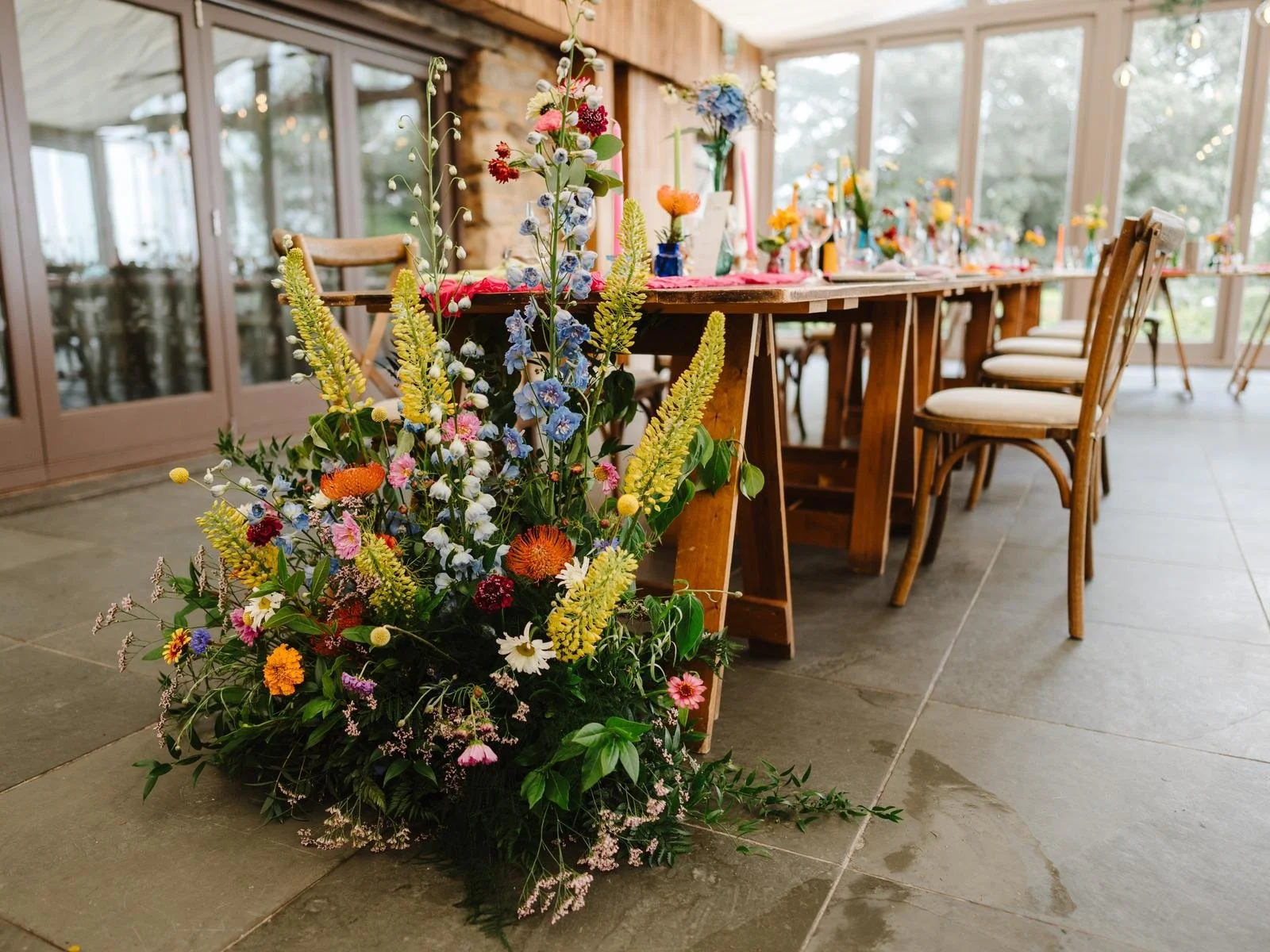
Start With Your Wedding Venue
Your venue plays a huge role in determining which colours will work best. For example:
Barn venues often suit:
soft neutrals
warm peach tones
sage greens
Coastal venues look beautiful with:
pale blues
whites and creams
soft pastels
Garden weddings can embrace:
colourful florals
wildflower palettes
meadow tones
Looking at your venue surroundings can give you a natural starting point for your wedding flower colours.
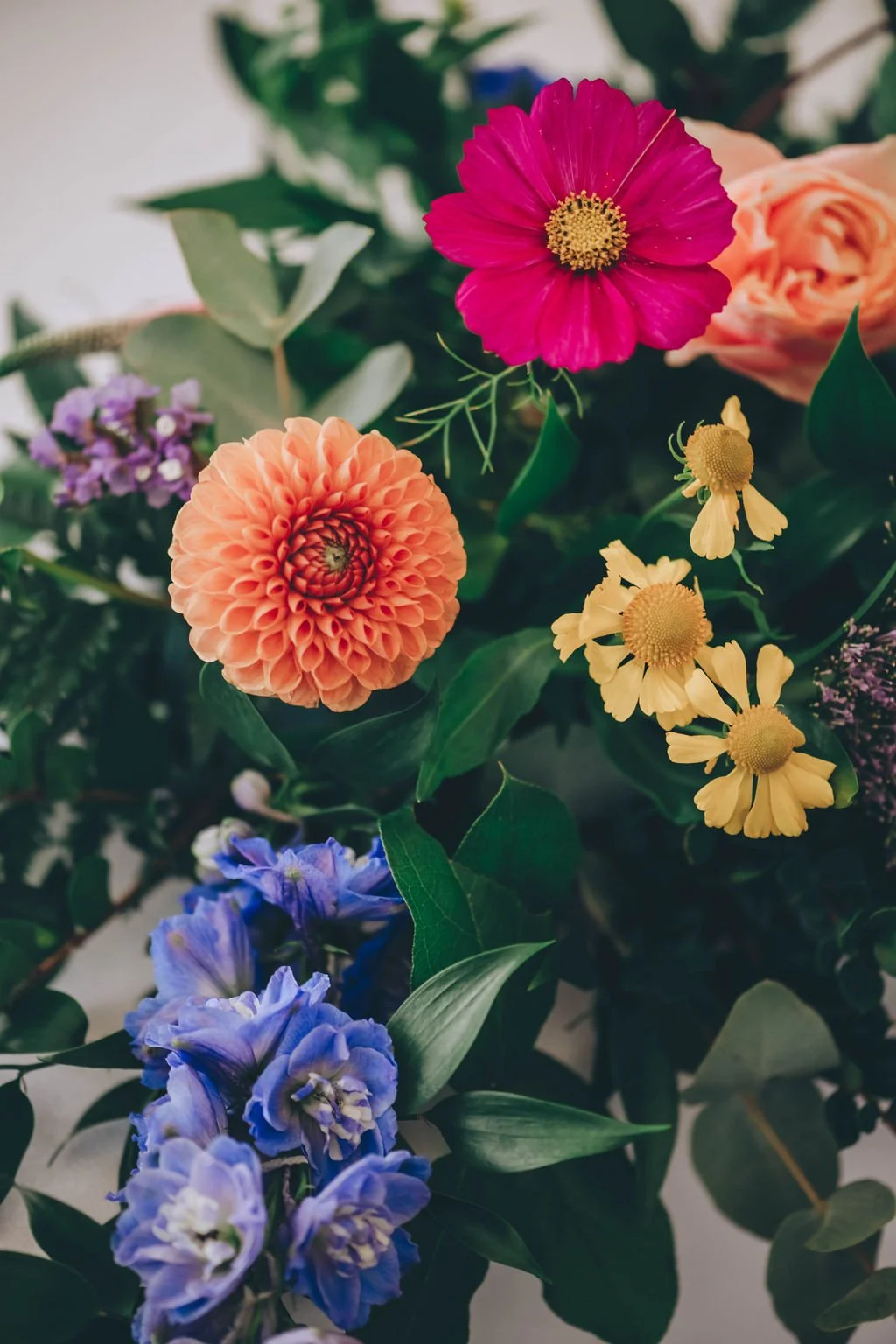
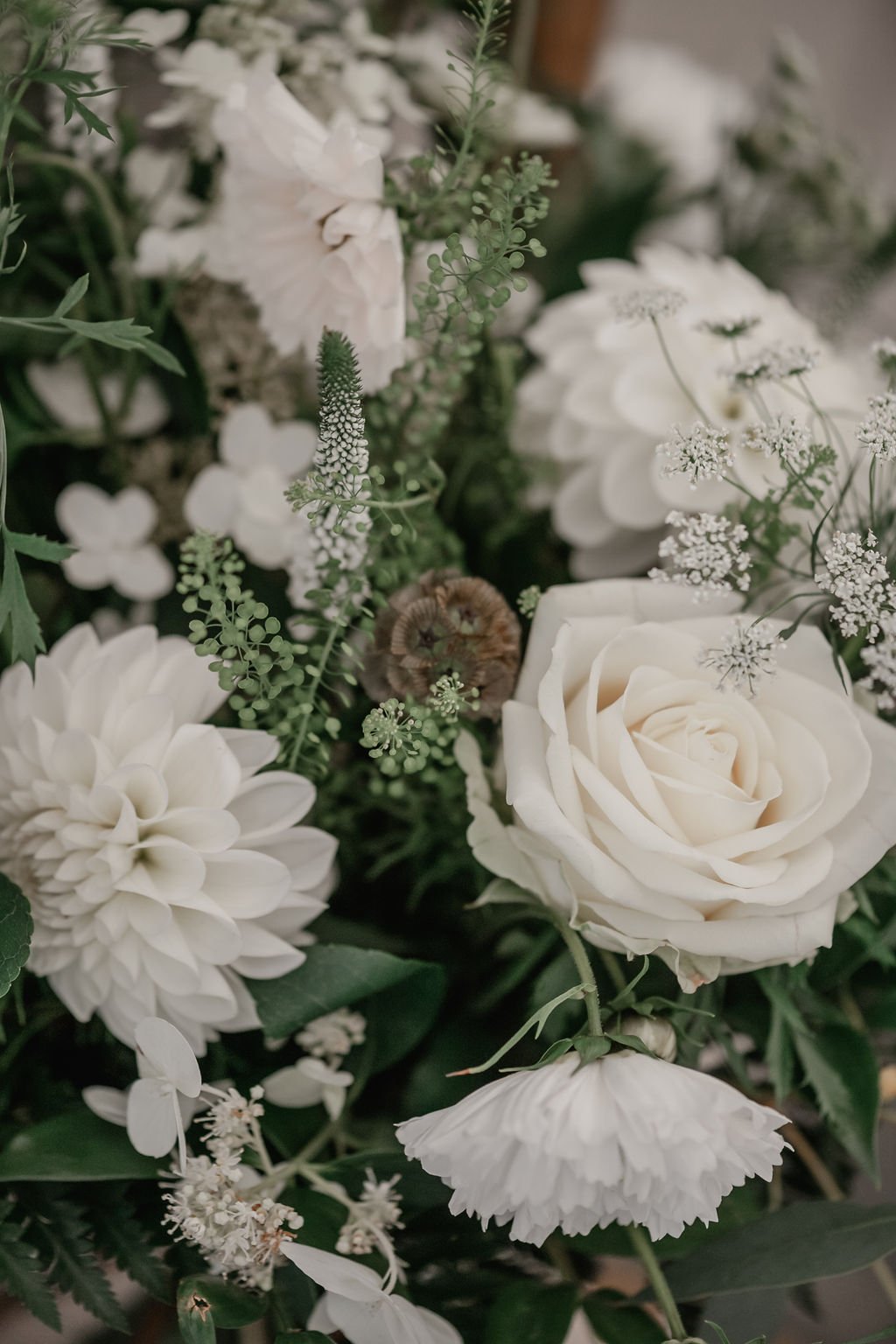
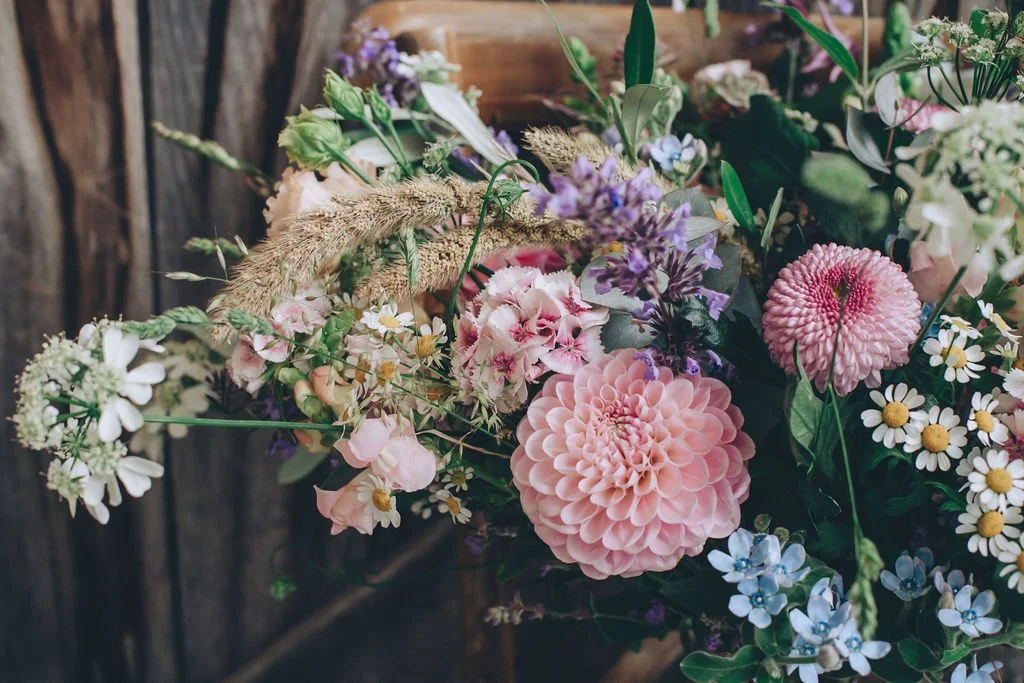
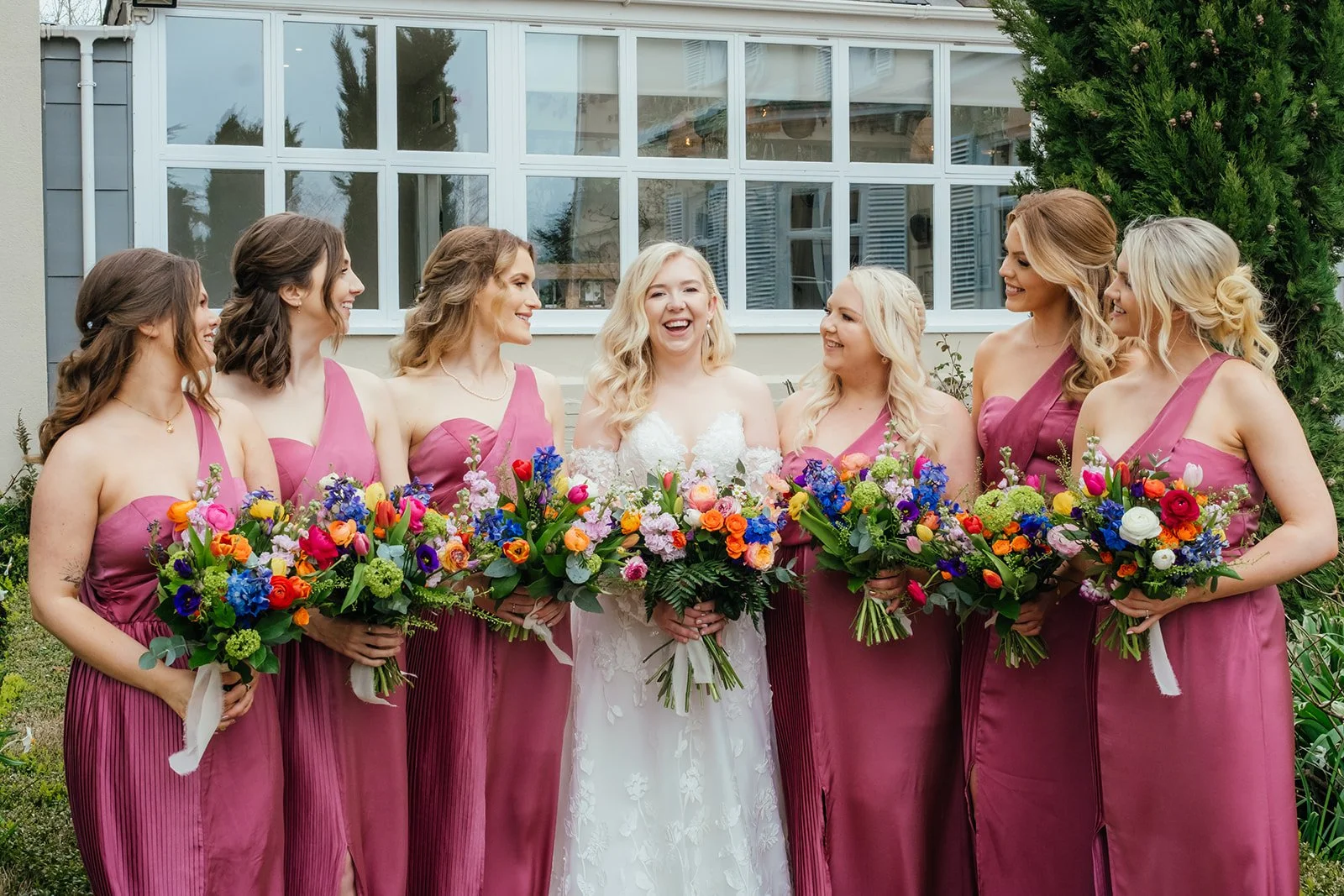
Consider Bridesmaid Dresses
Bridesmaid dresses often influence the colour palette for wedding flowers. Some couples prefer flowers that match the dresses closely, while others choose complementary tones.
For example:
Sage dresses with ivory and blush flowers
Dusty pink dresses with peach and cream blooms
Navy dresses with soft whites and greenery
This approach helps create a cohesive look throughout your wedding photographs. With that being said, there’s no rule that your flowers need to match your bridesmaids’ dresses. In fact, choosing something that gently contrasts, or simply going with what you love, can often feel softer and more considered.
Think About the Season
Seasonal flowers often influence colour palettes naturally.
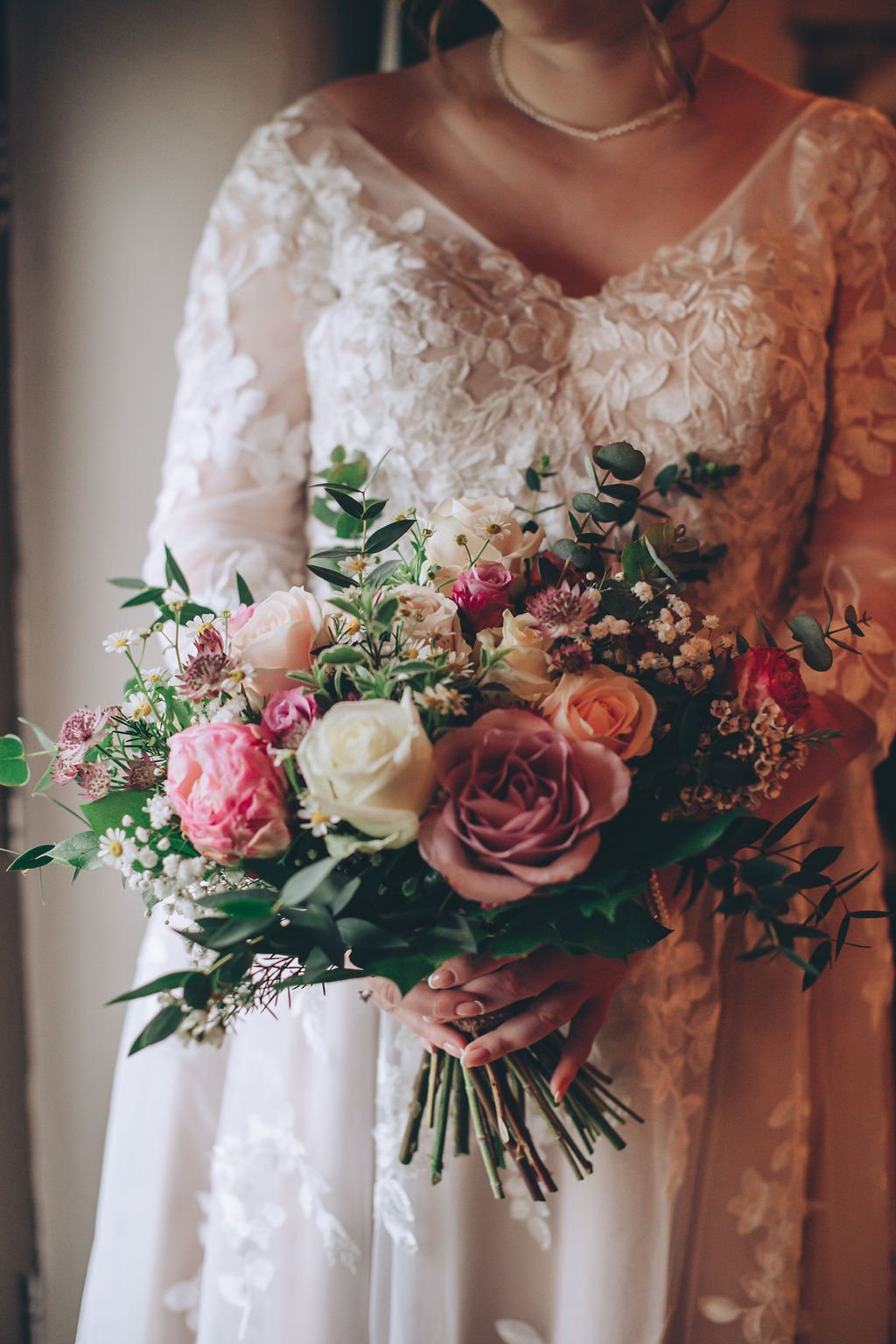
Spring wedding flowers often include:
blush pink
pale yellow
soft lavender
Summer weddings often feature:
bright coral
peach tones
vibrant pinks
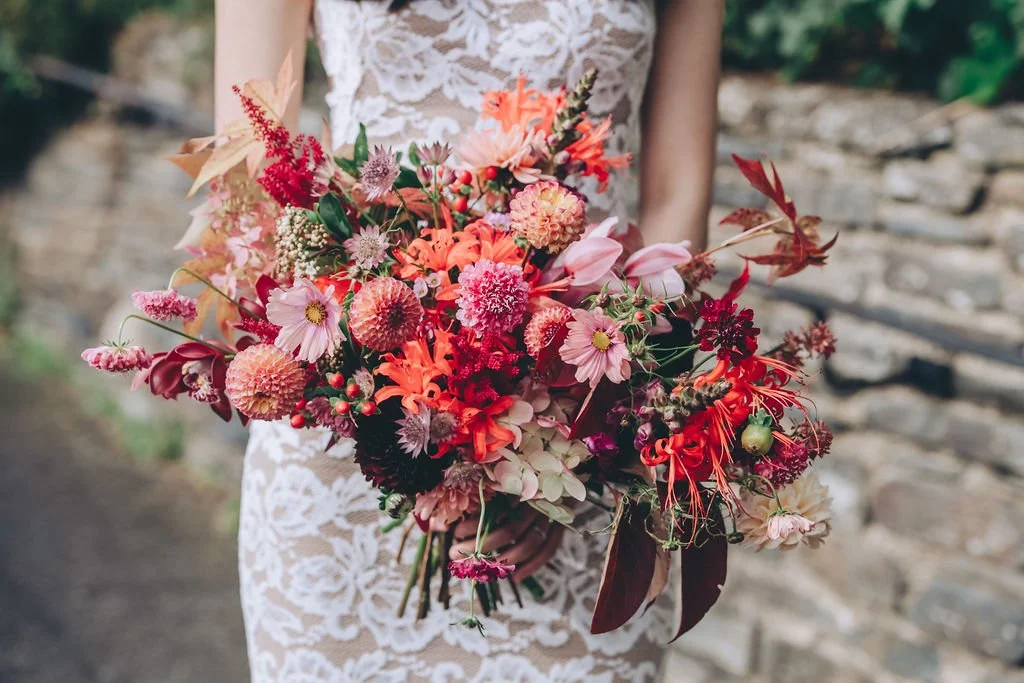
Autumn weddings often include:
burgundy
burnt orange
warm neutrals
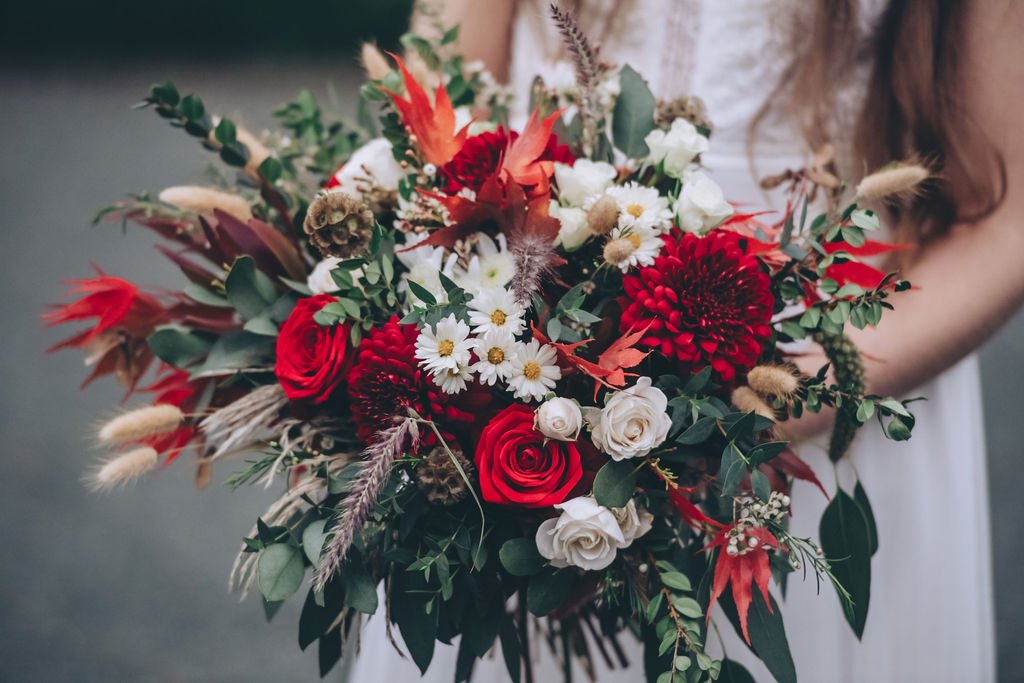
Winter weddings often favour:
deep reds
whites and greenery
rich berry tones
Choosing seasonal flowers can help ensure your wedding flowers feel authentic and beautiful.
Keep Your Palette Simple
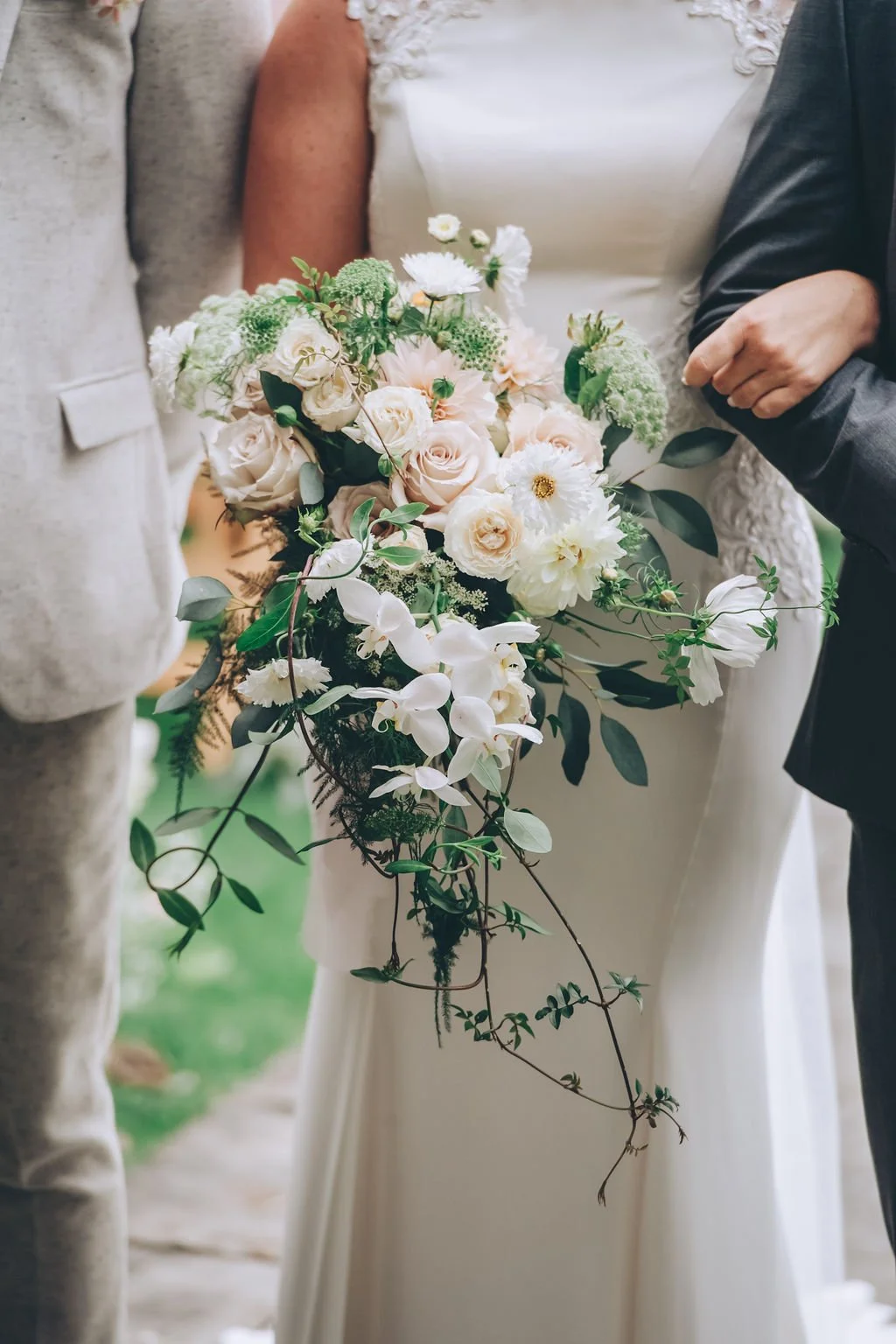
One of the most helpful pieces of advice when choosing wedding flower colours is to keep your palette simple. Most weddings work best with two to four main colours, supported by greenery and neutral tones.
For example:
blush + cream + greenery
peach + ivory + sage
blue + white + soft grey
This keeps the overall look elegant and balanced.
Consider Texture as Well as Colour
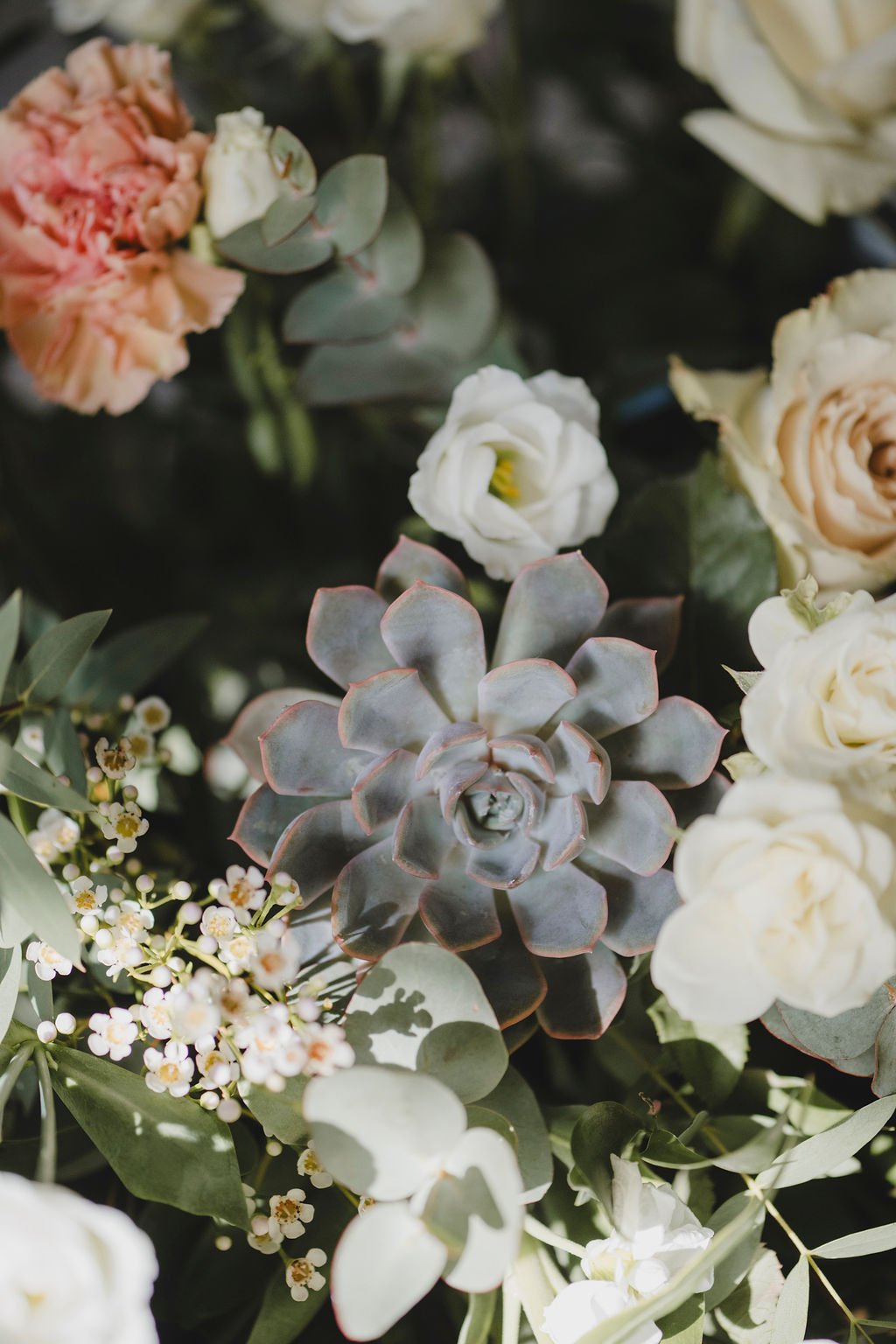
Beautiful wedding flowers are about more than colour alone. Texture plays a huge role in creating depth and interest.
Florists often combine:
large focal flowers
delicate filler flowers
flowing foliage
This mixture of shapes and textures helps bring the colour palette to life.
Trust Your Florist’s Guidance
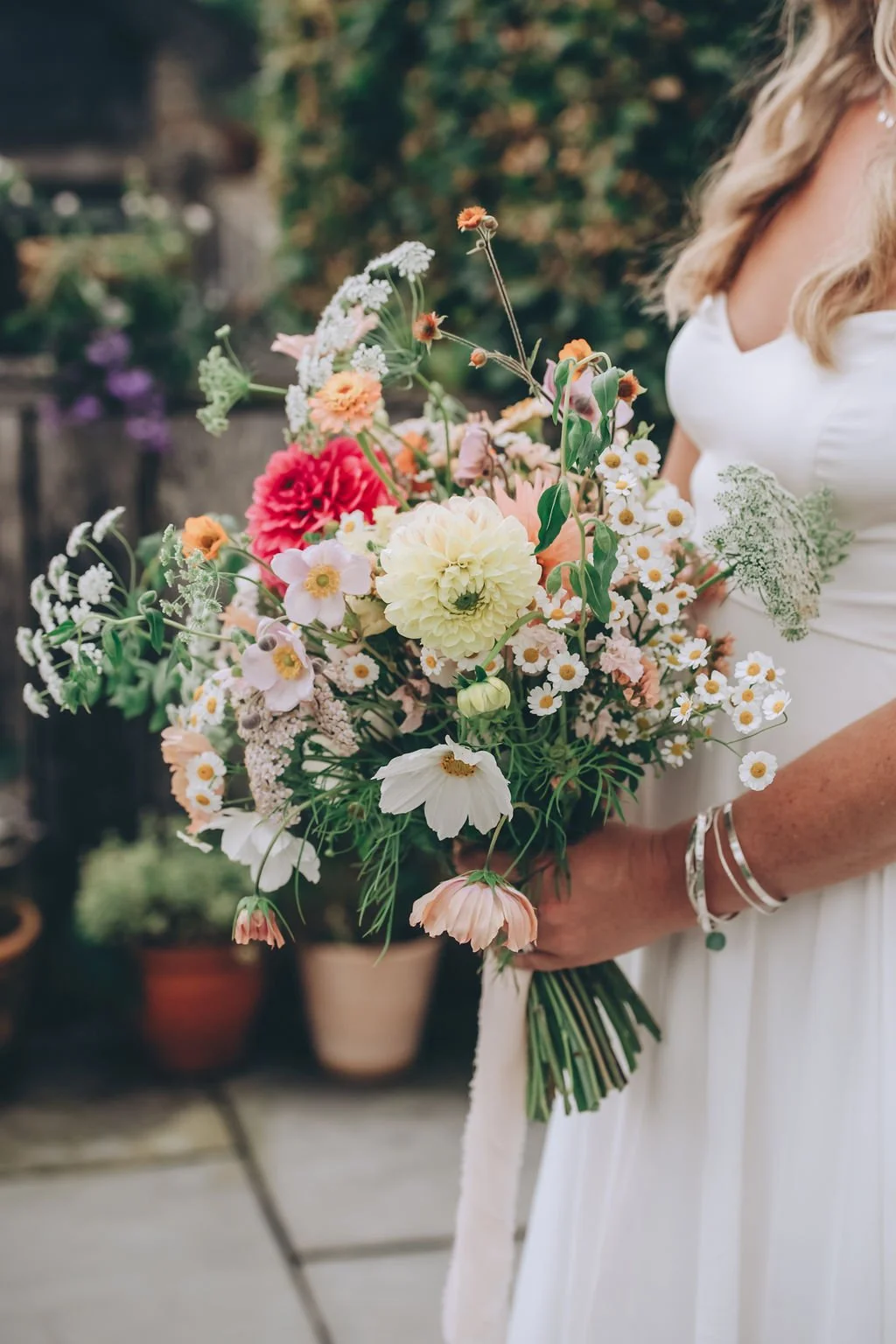
Finally, one of the most valuable things you can do is trust the expertise of your wedding florist. A florist understands how colours work together, which flowers are seasonal and how to design arrangements that photograph beautifully.
At Escential Blooms, we always work closely with couples to create wedding flowers that complement their venue and reflect their style.
Final Thoughts
Choosing your wedding flower colour palette doesn’t need to feel overwhelming. By considering your venue, dresses, season and overall style, you can create a palette that feels natural and beautiful. So, if you’re currently planning your wedding and exploring ideas for wedding flowers in Cornwall or Devon, we would love to help you design a colour palette that brings your vision to life.